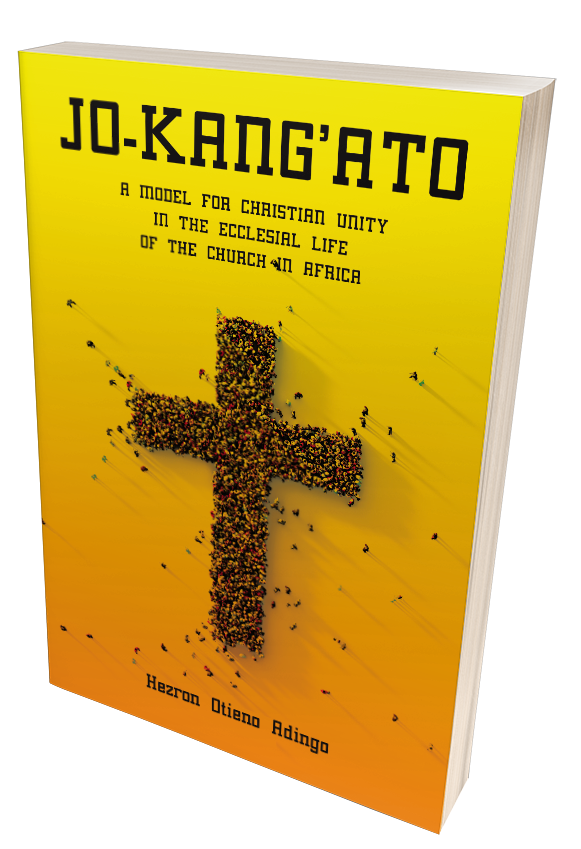
Disunity remains the dilemma that the church in Africa continues to face. The parsimonious relationship among Christians is a reality at the interdenominational, denominational, and local church levels. The mission of the church in Africa is affected as a result. The anticlimax of the results expected upon the assumption of ecclesial leadership and control by the indigenous people following the departure of Western missionaries testifies to this fact.
Ecclesiologists have proposed a couple of models to address the problem, the prominent ones being the familial model, which has its basis in the scripture and advocates for the mutual relationship found at home as a pattern for ecclesial life, and the communitarian model. The two, however, do not provide a proper understanding of Christian unity in the ecclesial life of the church in Africa because the relationship prescribed by them is not intimate or broad enough in scope to meet the expectations of African Christians.
The misunderstanding arising from the failure of these ecclesial models in their current form contributes to the persistence and escalation of disunity. The lack of proper clarification also culminates in remote relationships among believers and even the disowning of one another. The model of the family itself is laden with Western cultural overtones, which reek of individualism whose characteristics are isolation, prejudice, and exclusion. These are catalysts of conflict among parishioners. The model of the community too distorts the meaning of unity and inculcates a strange kind of engagement that is neither scriptural nor African. It has an assumption as its basis as it leads people to hope that tranquility and meaningful coexistence will be realized even without input to solve outstanding issues. Both models manifest exclusivism, which provides fodder for domination manifested in elitism, clericalism, superiority complexes, mechanical relationships, and alienation among Christians. The limitations presented in the models render a book of this kind necessary.